
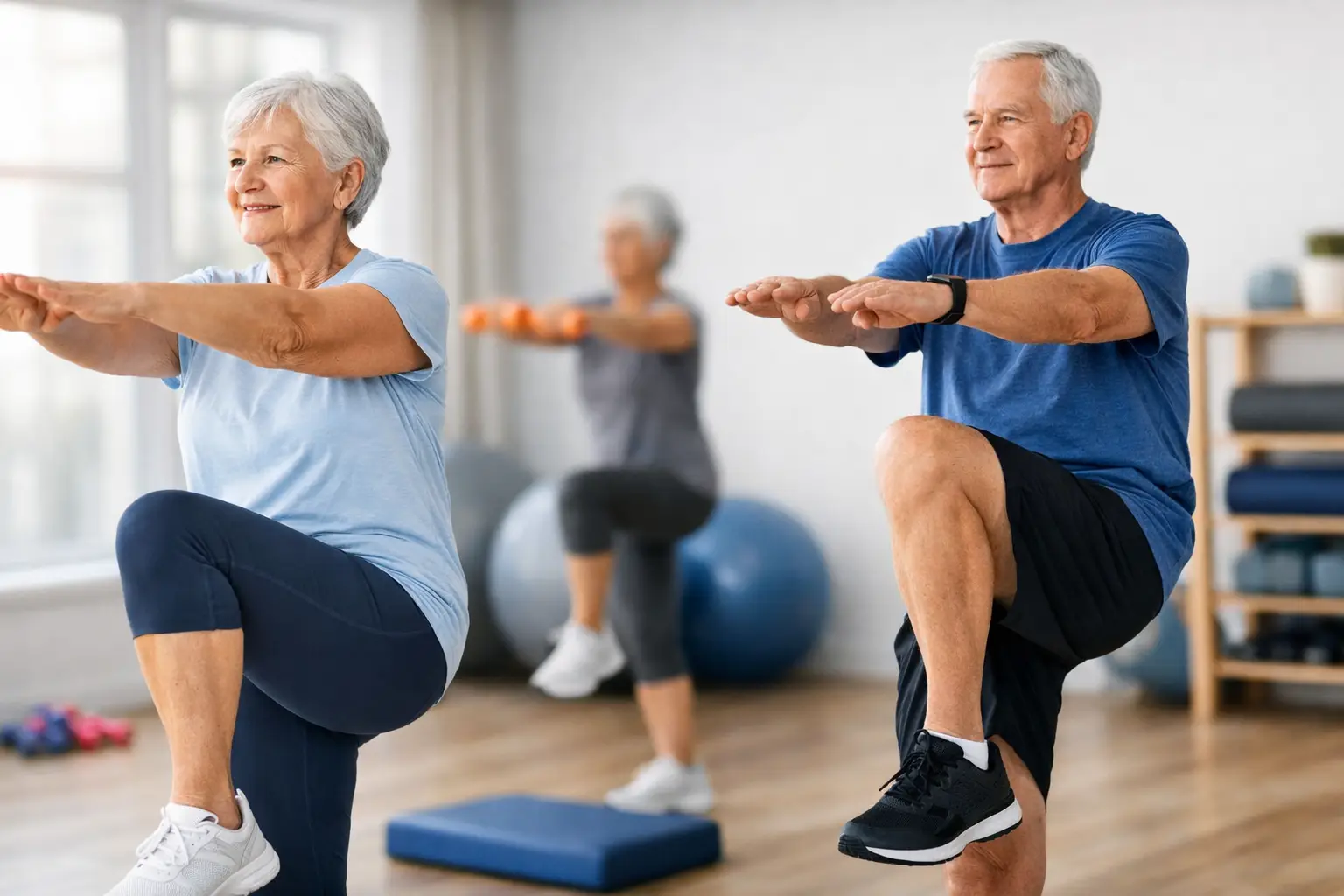
A fall often seems to come out of nowhere – getting up too quickly, turning in the kitchen, stepping over a rug, or losing balance on the way to the bathroom at night. For many older adults and their families, that moment can change confidence just as much as it changes mobility. The good news is that falls prevention exercises for seniors can improve balance, strength, and everyday stability when they are chosen carefully and practiced consistently.
The key is not doing the hardest exercises. It is doing the right ones, at the right level, with attention to safety. For some people, that means beginning with a chair nearby and focusing on weight shifts. For others, it means progressing to standing balance and leg strengthening. A good plan should match the person, their home environment, and any health conditions that may affect movement.
Why falls happen more often with age
Falls are rarely caused by one single problem. More often, they happen when several factors build up at once. Leg weakness, slower reaction time, reduced balance, joint stiffness, poor footwear, medication side effects, low vision, and unsafe home setups can all play a role.
That is why exercise matters so much. The right movement program can target some of the biggest physical contributors to falls, especially reduced leg strength, poor postural control, and difficulty adjusting during everyday tasks like turning, reaching, or stepping backward. Exercise cannot remove every risk, but it can improve the body’s ability to respond when balance is challenged.
What good falls prevention exercises for seniors should target
Not all exercise supports fall prevention in the same way. Walking is valuable for general health, but by itself it may not be enough to improve balance reactions or lower-body strength. A more effective program usually includes a mix of balance training, functional strength work, and controlled practice of everyday movements.
The best falls prevention exercises for seniors often focus on standing tolerance, ankle and hip control, sit-to-stand ability, stepping practice, and confidence with shifting body weight. They should feel manageable but not effortless. If an exercise is too easy, it may not create enough change. If it is too hard, it may increase fear or become unsafe.
8 exercises that support balance and stability
1. Sit-to-stand
This is one of the most practical exercises for fall prevention because it strengthens the legs in a way that directly supports daily life. Sitting down and standing up are movements people do many times each day, and difficulty with this task is often linked with reduced mobility.
Use a stable chair that does not slide. Sit tall, place the feet under the knees, and stand up without pulling on nearby furniture if possible. Then slowly sit back down with control. If needed, begin by using the hands on the armrests and build toward less support over time.
2. Heel raises
Standing calf strength helps with walking, stair climbing, and making quick balance corrections. Stand behind a sturdy chair or at a kitchen counter, hold on lightly, and rise up onto the toes. Lower slowly back down.
This may look simple, but it can be surprisingly challenging. The goal is controlled movement rather than speed.
3. Marching in place
Marching helps improve weight shifting and single-leg standing time, both of which are important for safer walking. While holding a stable surface, lift one knee, lower it, and then lift the other.
Start small if needed. Even a modest knee lift can help train balance and coordination.
4. Side leg raises
Hip strength plays a major role in pelvic stability and stepping control. Stand tall while holding onto a support, lift one leg out to the side without leaning the trunk, then return it slowly.
This exercise is useful for people who feel unsteady when turning or walking on uneven ground. The movement should stay smooth and controlled, not forced.
5. Tandem standing
This balance exercise narrows the base of support and asks the body to work harder to stay upright. Stand near a counter and place one foot directly in front of the other, as if standing on a line. Hold the position, then switch sides.
Some people may need to begin with the feet slightly apart instead of heel-to-toe. That is completely appropriate. Progress should be based on safety, not pressure.
6. Weight shifts
Many falls happen during transitions – reaching into a cupboard, stepping around furniture, or turning to speak to someone. Weight shifting helps train the body to move the center of gravity more confidently.
Stand with feet hip-width apart while holding a stable surface. Gently shift weight from one leg to the other, then forward and backward as tolerated. Small, controlled shifts are enough at first.
7. Step taps
This exercise helps with foot clearance and coordination. Stand in front of a low step or sturdy object and tap one foot up onto it, then return it to the floor. Alternate sides.
It is especially helpful for practicing controlled stepping. If there is any concern about catching the foot, use a very low height and close supervision.
8. Supported mini squats
Mini squats build strength in the thighs and hips, which are essential for walking, standing from a chair, and recovering balance. While holding a counter or chair, bend the knees slightly as if preparing to sit, then return to standing.
The movement should stay small and comfortable. Deep squats are not necessary and may aggravate knee pain in some people.
How often these exercises should be done
Consistency matters more than intensity. For many older adults, practicing balance and strength exercises two to three times per week is a realistic place to start. Some lighter activities, such as sit-to-stand practice or marching at the counter, can also be incorporated into daily routines.
Results are usually gradual. People often notice small changes first – feeling steadier while dressing, needing less effort to stand up, or feeling less hesitant when walking to the mailbox. Those changes are meaningful because they support independence.
That said, it depends on the individual. Someone who has had a recent fall, is living with Parkinson’s disease, has neuropathy, or is recovering from hospitalization may need a more personalized program. In those cases, the exercise itself is only one part of the plan. Home setup, walking aids, footwear, vision care, and medication review may also need attention.
Safety comes first
Falls prevention exercise should feel challenging, but it should not feel risky. The safest approach is to begin with a stable support nearby, such as a kitchen counter or sturdy chair. Avoid using furniture that moves, and do not practice standing balance tasks on slippery floors or in dim lighting.
Stop and seek clinical advice if exercise causes chest pain, dizziness, sudden shortness of breath, or joint pain that does not settle. It is also wise to get guidance before starting a new routine if there is a history of falls, fainting, stroke, significant weakness, or recent surgery.
Supervision can make a real difference, especially at the beginning. Some people benefit from family support. Others do better with a physical therapist who can adjust technique, progress exercises safely, and identify risks that may not be obvious at home.
When exercise should be tailored by a professional
Generic exercise sheets can be helpful, but they are not always enough. Two people of the same age may have very different fall risks. One may need ankle strengthening and confidence training after becoming less active. Another may have vestibular issues, arthritis, poor sensation in the feet, and side effects from medication. The same program will not suit both.
A therapist can assess gait, transfers, reaction strategies, mobility aids, and home hazards to create a plan that is realistic and specific. At Rapha Allied Health, this kind of person-centered support is especially valuable for older adults who want to remain safe at home while maintaining as much independence as possible.
Building exercise into daily life
The most effective program is often the one that actually gets done. That may mean attaching exercises to routines that already exist. Sit-to-stand can be practiced from a dining chair before meals. Heel raises can be done at the kitchen counter while waiting for the kettle. Marching can be added before a walk down the hallway.
There is also room for flexibility. On a good day, a person may do a full session. On a low-energy day, they may only complete one or two movements with support. That still counts. Progress in older age is not about perfection. It is about maintaining function, reducing avoidable risk, and keeping confidence from shrinking after a near miss or a fall.
A steady body supports a fuller life. Even small amounts of well-chosen practice can help an older adult move with more confidence in the places that matter most – at home, in the community, and through the routines that make life feel like their own.



0 Comments